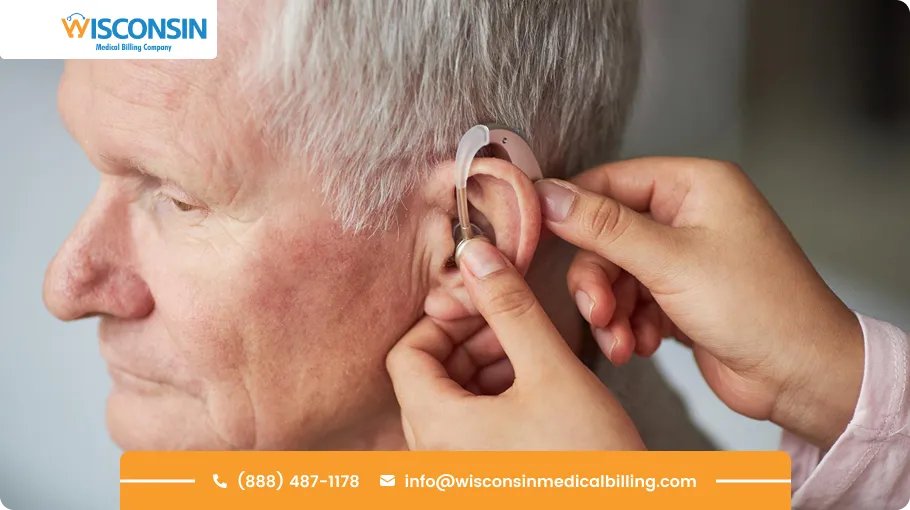
The ICD 10 code for hearing aid is not a single code used for every claim. Providers usually report the patient’s hearing condition first, such as hearing loss, and then add related diagnosis or status codes when needed for hearing aid evaluation, fitting, or follow up.
The claim for a patient who needs hearing aid testing because of bilateral sensorineural hearing loss will first show the hearing loss diagnosis together with the appropriate CPT codes for evaluation and fitting services. Correct coding helps reduce denials and supports faster reimbursement.
Hearing Loss Diagnosis Comes First
Before billing for any hearing aid service, providers must document the actual hearing condition. Payers do not approve hearing aid related services based only on the device itself. They want the medical reason behind it.
This is why hearing loss ICD 10 codes are the foundation of most claims.
Common Hearing Loss ICD 10 Codes
Some commonly used diagnosis codes include:
- H90.3 – Sensorineural hearing loss, bilateral
- H90.0 – Conductive hearing loss, bilateral
- H90.6 – Mixed conductive and sensorineural hearing loss, bilateral
- H91.90 – Unspecified hearing loss, unspecified ear
- Z97.4 – Presence of external hearing aid
The correct code depends on provider documentation, audiology findings, and the affected ear.
Example from Daily Practice
A patient visits with reduced hearing in both ears and reports trouble understanding speech during normal conversation. After testing, the provider confirms bilateral sensorineural hearing loss.
Instead of billing a general hearing aid diagnosis only, the stronger claim uses H90.3 with the related service code for testing and fitting. This improves medical necessity support.
Which ICD 10 Code Supports Hearing Aid Claims?
Many providers search for a single icd 10 code for hearing aid, but most claims require diagnosis plus service coding together.
The hearing aid itself is usually not represented by one universal ICD 10 code. Instead, coding depends on the reason for treatment.
Hearing Aid Status Code
The provider uses Z97.4 code to document existing hearing loss that requires hearing aids which describes the patient’s current condition. The code functions as the standard ICD 10 for determining the presence of hearing aids during medical procedures that occur after the initial treatment.
Hearing Aid Evaluation Coding
When the patient is being assessed for a new device, the provider may use the hearing loss diagnosis first and support it with evaluation documentation.
This is often searched as icd 10 code for hearing aid evaluation, but in practice, the diagnosis code supports the visit while the procedure is reported using CPT. That is why diagnosis and procedure coding must work together.
Essential Hearing Aid CPT Codes
Diagnosis coding alone does not bring payment. Providers also need the correct hearing aid CPT codes to report services performed. This is where many billing errors happen.
Common Hearing Aid CPT Codes
Frequently used codes include:
- 92557 – Comprehensive audiometry threshold evaluation and speech recognition
- 92590 – Hearing aid examination and selection for monaural use
- 92591 – Hearing aid examination and selection for binaural use
- V5010 – Assessment for hearing aid
- V5011 – Fitting and orientation check of hearing aid
- V5020 – Conformity evaluation
Some payers may also require HCPCS V codes depending on device billing rules.
Right Ear Pain and Hearing Complaints
Sometimes the visit starts with pain, not hearing loss. A patient may report discomfort first, and later testing shows hearing decline. In these cases, providers must code the presenting issue correctly.
ICD 10 for Right Ear Pain
The common icd 10 for right ear pain is:
H92.01 – Otalgia, right ear
This should not replace the hearing loss diagnosis if hearing impairment is also confirmed. Both may be needed depending on the encounter.
When to Use Both Codes
For example, a patient presents with right ear pain and reduced hearing after infection. The provider documents otalgia and confirms conductive hearing loss. Billing both conditions gives a clearer clinical picture and supports payer review.
Billing for Bilateral Hearing Aids
Doctors request the appropriate ICD 10 code for bilateral hearing aids because their medical claims rely on the diagnosis. The existence of bilateral hearing aids cannot be represented by a single universal ICD 10 code.
Best Supporting Diagnosis
For many cases, providers use H90.3 – Sensorineural hearing loss, bilateral or another bilateral diagnosis depending on findings. This supports the need for binaural fitting and follow up services.
Device Documentation Matters
Payers may request:
- Audiology testing results
- Medical necessity notes
- Physician recommendation
- Device fitting details
- Follow up reports
Without these records, even correct coding may still lead to denial.
Hearing Test Coding and Claim Support
Many claims begin with testing before hearing aid selection. Providers also search for icd 10 hearing test, but testing usually depends on both diagnosis coding and procedural reporting.
ICD 10 Supports the Test
The diagnosis explains why the test is needed.
Examples include:
- Hearing loss
- Ear pain
- Tinnitus
- Balance issues
- Speech recognition concerns
CPT Reports the Service
The procedure itself is billed using testing CPT codes like:
- 92557
- 92552
- 92567
Using only a diagnosis code without the correct procedure code creates incomplete claims. This is one of the most common revenue leaks in audiology billing.
Strong Documentation Protects Revenue
Good billing starts with strong charting. Providers should make sure every visit includes:
- Symptoms and hearing complaints
- Test findings
- Ear affected
- Type of hearing loss
- Device recommendation
- Fitting details
- Follow up care plan
This helps support both hearing aid icd 10 coding and proper CPT reporting.
Better Notes Mean Faster Payment
Clean documentation reduces payer questions, lowers denial rates, and protects practices during audits. It also helps billing teams submit cleaner claims the first time instead of correcting avoidable mistakes later.
Conclusion
The goal of using the right icd 10 code for hearing aid is not just claim submission. It is about proving medical need, and making sure providers are paid correctly for the care they deliver.
Most successful claims start with the correct hearing loss diagnosis, supported by accurate testing, fitting, and follow up coding. Whether you are billing for icd 10 code for hearing aid evaluation, icd 10 code for hearing aid status, or managing hearing aid CPT codes, precision matters at every step.
At Wisconsin medical billing, we help providers reduce denials, improve coding accuracy, and strengthen revenue across specialty billing services. Clean claims create faster payments, and the right billing partner helps make that happen consistently.
FAQs
Which is the correct ICD 10 code for hearing aid?
There is no single universal ICD 10 code for hearing aid for every claim. Providers typically bill for the hearing condition first, like hearing loss. They may also use Z97.4 to indicate the status of an existing external hearing aid.
What is the ICD 10 code for hearing aid status?
The most common ICD 10 code for hearing aid status is Z97.4 – Presence of external hearing aid. This is often used during follow up visits, replacement checks, or routine device management.
Which hearing loss ICD 10 code is used most often?
One common hearing loss ICD 10 code is H90.3 – Sensorineural hearing loss, bilateral. The final code depends on the type of hearing loss and whether one or both ears are affected.
What is the ICD 10 for right ear pain?
The common ICD 10 for right ear pain is H92.01 – Otalgia, right ear. If the patient also has confirmed hearing loss, both conditions may be reported on the claim.
Are hearing aid services billed with ICD 10 only?
No, providers need both diagnosis and procedure coding. ICD 10 shows the medical reasons. Hearing aid CPT codes cover services like hearing tests, fittings, and evaluations.