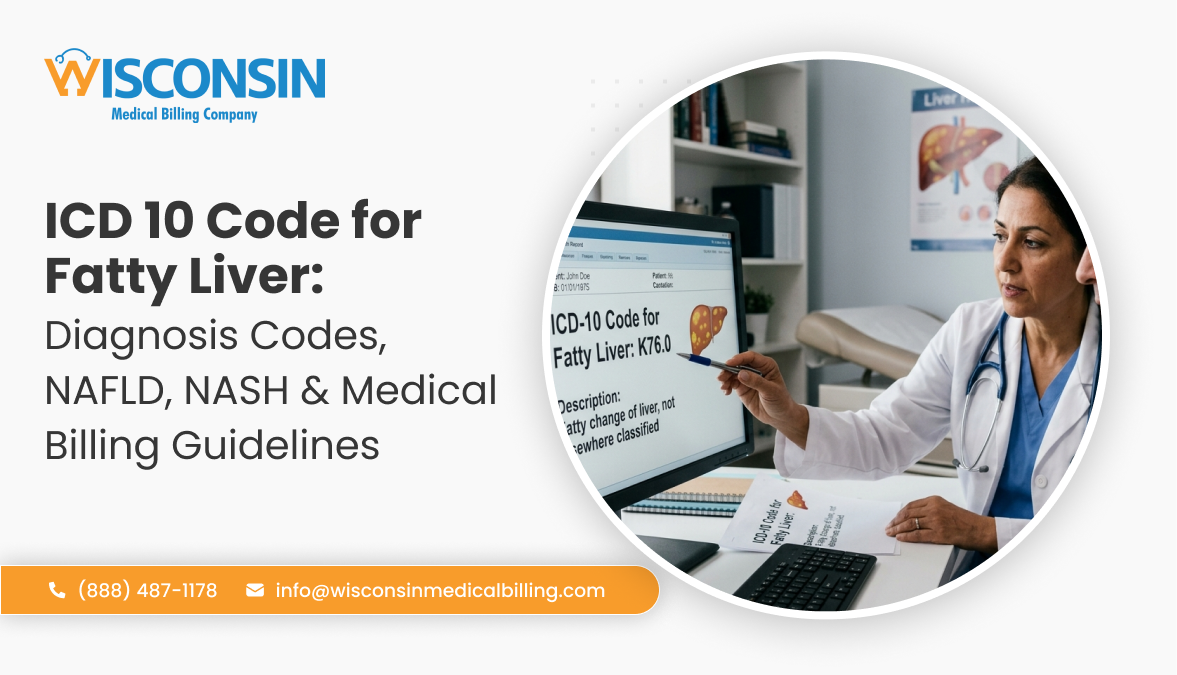
Fatty liver disease is a common clinical presentation in the medical practice that requires an accurate diagnosis, appropriate documentation, and careful selection of the ICD-10-CM codes for a correct reimbursement and the legal protection. For the providers, correct ICD 10 code for a fatty liver is critical in a representing the diagnosis and for justifying the medical necessity of the services rendered.
However, not all of the terms that represent hepatic fat deposition indicate the same disorder. Simple hepatic steatosis, nonalcoholic fatty liver disease (NAFLD), and nonalcoholic steatohepatitis (NASH) are clearly distinct entities with significant coding consequences. Medical coders need to consider the provider’s medical thinking, not merely the tools employed to arrive at the conclusion (diagnostic procedures and symptoms).
Get the fatty liver diagnosis codes you need to know. Learn the diagnosis differences in NAFLD and NASH. How do you document fatty liver and what codes do you use? Find out everything you need to know in your GI practice.
What Is Fatty Liver Disease?
Fatty liver disease is the condition in which excess fat accumulates in the liver cells. Fatty liver disease can harmless or may be affect the function of a liver depending on a severity and the aetiology of illness and can be developed to cirrhosis. This disease can also be referred to as hepatic steatosis, nonalcoholic fatty liver disease (NAFLD), and nonalcoholic steatohepatitis (NASH). More recently, the term metabolic dysfunction associated steatotic liver disease (MASLD) and MASH has been used.
Common Types of Fatty Liver Disease
The main terms that describe fatty liver and its manifestations include:
- Hepatic steatosis: fat deposition in liver cells.
- Nonalcoholic fatty liver disease (NAFLD): a diagnosis that generally indicates fatty liver without heavy alcohol consumption.
- Nonalcoholic steatohepatitis (NASH): liver inflammation with fat deposition in liver cells.
- Metabolic dysfunction-associated steatotic liver disease (MASLD): fatty liver that is caused by cardiometabolic risk factors. Providers may also use metabolic dysfunction-associated steatohepatitis (MASH) for the inflammatory form.
When reviewing the provider’s documentation, coders must understand that the terms listed above are closely related but significantly different conditions. Thus coders must look at the documentation provided by the provider and go by the ICD-10-CM instructions in order to assign a code to the diagnoses.
Fatty liver ICD 10: which diagnosis code should you use?
The ICD 10 code for fatty liver is determined on the specific diagnosis. Fatty liver, not elsewhere classified is assigned to ICD-10-CM code K76.0. ICD-10-CM Diagnosis Code K76.7 Nonalcoholic steatohepatitis.
| ICD-10-CM code | Description | Coding consideration |
| K76.0 | Fatty (change of) liver, not elsewhere classified | Includes NAFLD and MASLD when applicable; review the code’s exclusion notes. |
| K75.81 | Nonalcoholic steatohepatitis (NASH) | Applies when NASH or the corresponding documented diagnosis is established. |
K76.0 Fatty (change of) liver, not elsewhere classified. K75.81 Nonalcoholic steatohepatitis. The ICD-10-CM classification system references fatty liver disease as: Coders therefore need to be aware that NASH is not included in code K76.0 and that detecting NASH prior to assigning this diagnosis code is important. Official ICD-10-CM code reference.
ICD 10 Code Fatty Liver: K76.0
ICD-10 code K76.0 describes fatty (change of) liver, not elsewhere classified. This code is generally used when the provider documents the presence of fatty liver or an equivalent diagnosis such as NAFLD without establishing another diagnosis that would be coded differently.
The code can also be assigned when the provider’s documentation contains terms such as hepatic steatosis or nonalcoholic fatty liver disease in accordance with the classification instructions.
Before assigning code K76.0, coders should:
- Review the provider’s final diagnosis
- Ascertain whether the documentation confirms the existence of simple steatosis, NAFLD, or a different liver disease
- Check for any relevant exclusion notes and coding instructions
- Avoid making assumptions based solely on an ultrasound or lab results when the provider has not confirmed any condition
- Ensure that the documentation supports a specific diagnosis
It is critical to note that code K76.0 should not be used when the provider’s diagnosis confirms NASH.
ICD 10 NASH: K75.81
The ICD 10 NASH code describes the diagnosis of nonalcoholic steatohepatitis that is identified with code K75.81. This code is generally used when the provider establishes the patient’s diagnosis of NASH.
The diagnosis of NASH implies that the patient has more severe liver disease since NASH is characterized by inflammation and liver cell injury in addition to fatty liver. When assigning this ICD 10 code, coders should ensure that the provider’s documentation confirms NASH or identifies an equivalent diagnose. In most cases, imaging that confirms the presence of fatty liver cannot confirm NASH.
The documentation should contain the provider’s assessment and treatment plan, and other factors that may be relevant to treatment and diagnosis. In case of the inconsistent or an ambiguous documentation, coders must ask the provider to clarify through the query.
Non-Alcoholic Fatty Liver Disease ICD 10: Understanding NAFLD
The typical code is K76.0 if the provider diagnosis of non-alcoholic fatty liver disease (NAFLD) is sufficient. Therefore, the term NAFLD is often assigned the ICD-10-CM code K76.0 unless otherwise supported by the provider’s documentation or special coding instructions.
Just remember, NAFLD is a broad name for a number of types of fatty liver disease. Simple steatosis without considerable inflammation and cell damage may be present in some patients with NAFLD. Others may have steatohepatitis with fibrosis and progressive liver damage.
Therefore, medical coders and billers must consider the possibility of different types of NAFLD when interpreting the provider’s documentation.
Documentation Considerations for NAFLD
An accurate diagnosis code depends on the completeness and precision of the provider’s documentation. A complete medical record should include:
- Provider diagnosis with supporting evidence
- Relevant diagnostic procedures
- The provider’s assessment and treatment plan
- Additional relevant conditions
- Follow-up advice and referrals
When assigning diagnosis codes, coders should document only the conditions created by the provider, following the documentation requirements.
Non-Alcoholic Steatohepatitis ICD 10: How NASH Differs From NAFLD
The keyword non-alcoholic steatohepatitis ICD 10 is focused on a particular illness with the code K75.81.
NAFLD and NASH are related but have different coding implications: “NAFLD as a term may be used for a description of fatty liver without formal diagnosis of steatohepatitis. NASH is a more accurate disease descriptor characterized by evidence of liver damage and inflammation.
| Clinical documentation | Potential code | Key consideration |
| Fatty liver, not elsewhere classified | K76.0 | Confirm the documented diagnosis and code instructions. |
| Nonalcoholic fatty liver disease (NAFLD) | K76.0 | Apply when supported by the documentation and classification. |
| Nonalcoholic steatohepatitis (NASH) | K75.81 | Requires documentation supporting the specific condition. |
| Elevated liver enzymes without a confirmed fatty liver diagnosis | Depends on the documented finding | Do not independently infer fatty liver disease. |
The provider’s final diagnosis determines code selection. A coder should not raise a typical fatty liver diagnosis to NASH based merely on probable inflammation, increased liver enzymes, or imaging abnormalities.
Documentation Guidelines for Accurate Fatty Liver Coding
The following documentation guidelines for fatty liver diseases are essential for accurate billable coding:
Confirm the Provider’s Diagnosis
Ensure the physician’s assessment and treatment plan before diagnosis coding: Once you know the diagnosis, coders can add the appropriate codes. If the record contains multiple terms for multiple problems, coders should question the provider if it is a single or multiple diagnoses (NASH, MASLD).
Review of Diagnostic Findings in Context
Once the diagnostic procedures confirm the presence of hepatic fat deposits, coders should confirm the provider’s final diagnosis before coding any more.
Imaging tests can aid, such as an abdominal ultrasound, however not all that is related to an imaging test or laboratory is presentational when choosing a diagnosis. For example, hepatic steatosis on ultrasound examination does not equate to NASH.
Document Associated Conditions Separately
Patients with fatty liver diseases often have various cardiometabolic disorders such as type 2 diabetes, obesity, dyslipidemia, and hypertension. Additionally, NAFLD can be complicated by cirrhosis. All of these conditions should be reported separately when they have been established by the provider.
Follow the Current ICD-10-CM Guidelines
Before submitting a claim, coders should review the current fiscal year’s coding guidelines and ensure that the selected ICD-10-CM code is appropriate for the provider’s documentation. In particular, outpatient coders should remember that it is inappropriate to report unconfirmed findings as confirmed.
☑
CODING QUALITY CONTROL
The Fatty Liver Documentation Check
Before assigning a diagnosis code, review the record for these essential elements.
🩺
01. Final diagnosis
Identify the condition established by the treating provider.
🔎
02. Supporting findings
Review imaging, laboratory findings, and the clinical assessment in context.
📑
03. Code instructions
Check inclusion terms, exclusions, and applicable coding guidelines.
💬
04. Clarification when needed
Query the provider when conflicting or unclear documentation affects code selection.
Documentation principle: Report supported diagnoses—not assumptions drawn from an isolated test result.
For additional guidance on coding encounters and other factors influencing healthcare services, review our guide to ICD-10-CM Z codes in medical billing and their appropriate application.
For more information about ICD-10-CM documentation and coding guidelines for fatty liver disease, consult the resources available at the CDC website.
Common Fatty Liver Coding Errors to Avoid
Coding mistakes can lead to claim denials, payment delays, inaccurate reporting and unnecessary administrative effort. Gastroenterologist practices should analyze common errors and their core causes.
Confusing NAFLD with NASH:
These diagnoses are closely comparable yet the coding assignments are very different. Before assigning K76.0 or K75.81, confirm the diagnosis as stated by the physician.
Coding based on test results:
The provider’s diagnostic evaluation should not be replaced by liver enzyme values or imaging findings.
Ignoring exclusion notes:
Always research the tabular instructions before assigning the final code, especially if additional diagnostic notations are present in the medical record.
Using outdated references:
Old code books and unofficial summaries may be missing the latest fiscal year guidelines.
Overlooking secondary diagnoses:
Other diagnoses reported in the record that affect the provider’s assessment should be classified according to appropriate rules.
Leaving documentation conflicts unaddressed:
Evaluation, list of problems, and expert notes should concur on a final diagnosis. Otherwise, a clarification might be necessary before processing the claim submission.
A comprehensive coding review should be performed to spot these and other irregularities before claims submission to prevent avoidable rework.
Medical Billing Considerations for Gastroenterology Practices
Providing the right diagnosis codes is only half the battle. Gastroenterology clinics should include all required information in claim submissions, ensure medical records support the services provided, and follow each payer’s specific requirements.
How Accurate Coding Helps Reimbursement
The proper assignment of diagnosis codes facilitates the billing process as it provides context about the services rendered and helps create the medical record associated with the claim. However, it is impossible to obtain payment solely on the diagnosis coding – the coverage, medical necessity, services billed, payer-specific requirements, and several other factors contribute to reimbursement.
The general steps for a successful billing process should always include:
- Patient and insurance information review
- Diagnosis code validation
- Claim specifics review
- Rejection and denial tracking
- Explanation of benefits review and supported error correction
- Correction and resubmission tracking
Practices that need additional support can use gastroenterology medical billing and medical coding services to improve claim accuracy and streamline claims submission.
Managing Denials and Accounts Receivable
Fatty liver claims denial may happen when diagnosis is ambiguous, conflicting data exists in records and the payer sought additional verification. The denial management team should identify the reason for each denial, determine the necessary corrective action, resubmit the claim, and track it until payment.
The gastroenterology denial management services can assist the practice with individual denial categorization, claim follow up, paperwork evaluation and denial trend analysis. Also, the continuing audit of accounts receivable can allow the practice to identify the denied or delayed claims and to priorities the oldest accounts for follow up.
To learn more about identifying recurring claim issues and improving denial prevention workflows, read our guide to professional denial management strategies and revenue cycle management.
Practices should review their performance on first-pass acceptability, rejection rate, days in accounts receivable, and days to settle denied claims as areas of opportunity. Most of the time, the reasons for the denied claims are not because of coding errors. You should be looking at the whole efficiency of the revenue cycle, not just the billing issues associated with coding.
Choosing Gastroenterology Medical Billing Services
Gastroenterology practices routinely handle many diagnoses, extensive documentation, myriad payer requirements, and enormous numbers of claims each day. The individuals who know the specialty-specific billing nuances can help the clinic lessen its administrative burden.
When evaluating gastrointestinal medical billing services, examine if the provider offers:
- Diagnosis and claim review workflows.
- Knowledge of gastroenterology coding requirements.
- Eligibility and insurance verification support.
- Claims submission and payment posting.
- Denial management and accounts receivable follow-up.
- Transparent reporting and communication.
- Processes for protecting patient information.
Internal medicine practices managing complex chronic conditions can also explore internal medicine billing services to support accurate diagnosis coding, claims processing, and reimbursement follow-up.
The right partner will be able to work with the practice’s billing and clinical departments to help it achieve the best outcomes without guessing the intent behind every service or coverage.
The Wisconsin providers can also explore the medical billing services in Wisconsin and related specialty billing solutions to select the most competent partner.
Final Thoughts
The assignment of the correct ICD 10 code to fatty liver claims depends on the diagnosis documentation provided by the gastroenterology provider. K76.0 is a common choice for fatty liver, not elsewhere classified, including NAFLD and related conditions. ICD-10-CM diagnosis coding guidelines suggest careful consideration of NASH and NAFLD to avoid the most frequent coding errors.
Practices looking for a medical billing company in Wisconsin can explore our billing and revenue cycle management solutions to find support tailored to their administrative and reimbursement needs.
When selecting the gastroenterology-specific medical billing services, the practices should evaluate the solution’s transparency, responsiveness, compliance support, and overall fit for the practice. The correct coding in combination with the efficient revenue cycle management helps the practice provide the best possible care.
Frequently Asked Questions
What is the ICD 10 code for fatty liver?
ICD 10 code for Fatty liver not elsewhere classified (includes NAFLD and MASLD) is K76.0. Always refer to the provider documentation and the ICD-10-CM guidelines.
What is the ICD 10 code for NASH?
Nonalcoholic steatohepatitis (NASH) is coded K75.81 in ICD 10. The condition should be documented by the provider.
Are NAFLD and NASH assigned the same ICD-10-CM code?
No, they are not. NAFLD is associated with ICD-10-CM code K76.0, whereas NASH is coded as K75.81.
Can fatty liver be assigned from the ultrasound report?
The coders should not make assumptions about the diagnosis based purely on the imaging results. Instead, the coding should follow the documentation and specific regulations.
How can medical billing services help gastroenterology practices?
Medical billing services can help the practice receive the payments owed to it, reducing the financial burden. By working with professional medical billing companies, the practices can ensure the highest claim quality and prevent avoidable administrative delays. The gastroenterology practices can benefit significantly from medical coding services, billing services, denial management services, and accounts receivable services.