Lupus is a serious autoimmune disease that may impact the skin, joints, kidneys, heart, lungs, and other body systems. For clinicians, the correct ICD 10 lupus code is essential in order to capture the details of the diagnosis accurately and report claims to insurance companies successfully.
Nevertheless, there are several nuances related to ICD-10 coding for lupus that medical professionals should be familiar with. First and foremost, there are different lupus diagnosis codes depending on the identified form of the disease and the patient’s symptoms. Moreover, coder errors and missing data can result in a nonpayment or late reimbursement.
Hence it becomes all the more important for the nephrologists, rheumatologists, PCPs and other physicians to know about the lupus ICD 10 coding and appropriate documentation and compliance. This article will cover the necessary information on lupus diagnosis coding including the list of typical ICD-10 codes, documentation criteria, possible coding errors and medical billing suggestions.
What Is the ICD 10 Code for Lupus?
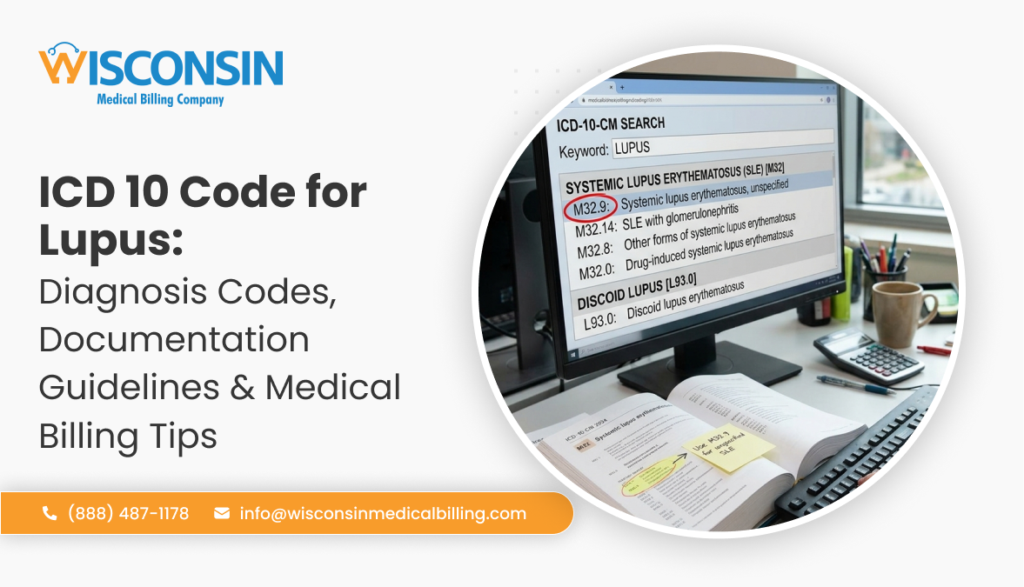
The ICD 10 code for lupus will depend on the diagnosis documented. For example, M32.9 – Systemic lupus erythematosus, unspecified may be ascribed to individuals with systemic lupus erythematosus (SLE) when the medical record does not identify a specific manifestation of the disease.
At the same time, more detailed lupus ICD 10 codes may be used in order to describe the patient’s condition in more detail depending on the physician’s documentation.
Below are some of the most common ICD-10-CM diagnosis codes related to lupus:
| ICD-10-CM code | Description |
| M32.0 | Drug-induced systemic lupus erythematosus |
| M32.10 | Systemic lupus erythematosus, organ or system involvement unspecified |
| M32.11 | Endocarditis in systemic lupus erythematosus |
| M32.12 | Pericarditis in systemic lupus erythematosus |
| M32.13 | Lung involvement in systemic lupus erythematosus |
| M32.14 | Glomerular disease in systemic lupus erythematosus |
| M32.15 | Tubulo-interstitial nephropathy in systemic lupus erythematosus |
| M32.19 | Other organ or system involvement in systemic lupus erythematosus |
| M32.8 | Other forms of systemic lupus erythematosus |
| M32.9 | Systemic lupus erythematosus, unspecified |
| L93.0 | Discoid lupus erythematosus |
| L93.1 | Subacute cutaneous lupus erythematosus |
| L93.2 | Other local lupus erythematosus |
Note that these codes are not interchangeable in the event of a medical record with lupus, and should always be cross-checked with the ICD-10-CM code book for coding adherence.
Understanding Common Lupus ICD 10 Codes
M32.9: Systemic Lupus Erythematosus, Unspecified
M32.9 is among the most common ICD 10 codes for lupus that are used by medical coders. According to the ICD-10-CM guidelines, this code refers to systemic lupus erythematosus without a specific additional form identified. Therefore, it may be used for patients with SLE if their diagnosis is not further specified by the physician’s documentation.
However, coders should not assign this code to patients with lupus if the medical record indicates a particular form of the disease. Use the physician’s documentation to select the most specific diagnosis code that accurately reflects the patient’s condition.
Use M32.9 only when the provider has established a diagnosis of systemic lupus erythematosus (SLE). If the provider suspects SLE but has not confirmed the diagnosis, consider other applicable diagnosis codes based on the documented signs, symptoms, or findings.
M32.0: Drug-Induced Systemic Lupus Erythematosus
This drug has known causes of systemic lupus erythematosus that is clinically described as drug-induced systemic lupus erythematosus. The proper code for this condition is M32.0.
When coding for this diagnosis, medical coders should make sure that the physician’s documentation supports this diagnosis. In particular, the medical record should specifically state lupus erythematosus associated with treatment with certain drugs. Other disease codes related to drugs should also be considered if applicable.
It is essential to note that coders should not assume that the patient’s systemic lupus erythematosus is drug-induced just because they are receiving a certain medication.
M32.10: SLE With Organ or System Involvement Unspecified
M32.10 refers to systemic lupus erythematosus with unspecified organ or system involvement. This code should be assigned to patients with SLE without additional specifications. However, this code is different from M32.9, which refers to systemic lupus erythematosus, unspecified.
Medical coders should ensure that they understand the difference between these two diagnostic codes in order to prevent coding errors. In particular, M32.10 should only be assigned when the medical record confirms the presence of systemic lupus erythematosus with unspecified organ or system involvement.
M32.14: Glomerular Disease in Systemic Lupus Erythematosus
M32.14 is a valid billable ICD-10 diagnostic code for Glomerular illness in systemic lupus erythematosus. It is an icd-10 specific diagnosis code for glomerular disease in systemic lupus erythematosus. The use of ICD10 code M32.14 can also be used to specify a medical diagnosis of M32.14.
When using this diagnostic code, medical coders should ensure that the physician’s documentation confirms that the patient’s lupus diagnosis involves glomerular disease. At the same time, it is essential to remember that clinicians are only permitted to report this code when the documentation explicitly states this particular diagnosis.
Coders further should consider any other diagnostic code, such as other specified/unspecified kidney disease, if the patient clinical signs indicate that the patient suffers from other, more specific kidney diseases than SLE glomerular disease.
M32.11, M32.12, M32.13, M32.15, and M32.19
SLE is a multi-system auto-immune disease that can impact several systems and organs of the body. All the types of systemic lupus erythematosus have the same ICD 10 CM codes which are M32.11, M32.12, M32.13, M32.15 and M32.19.
- 11 – Endocarditis in systemic lupus erythematosus
- 12 – Pericarditis in systemic lupus erythematosus
- 13 – Lung involvement in systemic lupus erythematosus
- 15 – Tubulo-interstitial nephropathy in systemic lupus erythematosus
- 19 – Other organ or system involvement in systemic lupus erythematosus
When assigning these diagnostic codes, coders should rely on the physician’s documentation. Practically, the documentation should explicitly state that the patient’s systemic lupus erythematosus involves the specified manifestation.
In particular, coders should avoid using general lupus diagnosis codes when a more specific one is applicable.
L93.0, L93.1, and L93.2: Cutaneous Lupus Codes
Not all types of lupus erythematosus are classified under the same ICD-10-CM diagnostic codes. In particular, L93 is a classification that includes different diseases affecting the skin. For instance, L93.0 refers to discoid lupus erythematosus, while L93.1 describes subacute cutaneous lupus erythematosus. Lastly, L93.2 is used to identify other local forms of lupus erythematosus.
These diagnostic codes are only applicable when the physician’s documentation confirms the presence of these conditions. In other words, coders should only assign these codes to patients if the medical record actually indicates these local forms of lupus erythematosus.
Lupus Diagnosis Coding: How to Select the Correct Code
When assigning diagnosis codes to patients with lupus, medical coders should rely on the information provided by the physician. In particular, the physician’s documentation should describe the patient’s condition in detail.
Before assigning a lupus diagnosis code, review the official ICD-10-CM coding guidelines to confirm the applicable code set and coding instructions.
Below are a few evidence-based lupus coding tips that can help medical coders select the most accurate diagnosis code:
Identify the Documented Type of Lupus
The first step is to identify the type of lupus diagnosed by the physician. Systemic lupus erythematosus (SLE), discoid lupus, subacute cutaneous lupus, and other forms of this disease are assigned to different ICD-10-CM diagnostic codes.
It is essential to make sure that the chosen code applies to the patient’s condition.
Review Associated Organ Involvement
In many cases, patients with systemic lupus erythematosus present with additional symptoms affecting the kidneys, heart, lungs, and other systems. In particular, M32.10 – M32.19 are used to identify the presence of additional manifestations of this disease.
Check the Complete Code Description
When searching for diagnosis codes in the ICD-10-CM code book, medical coders should pay close attention to code descriptions. Some codes have additional instructions that can help medical coders ensure that the selected code is appropriate for the patient’s condition.
Request Clarification When Necessary
If the physician’s documentation does not provide enough information regarding the patient’s condition, medical coders should request additional information from the provider in accordance with the organization’s query policies.
Documentation Guidelines for Lupus Billing
Laboratory findings may assist in concluding a diagnosis; however, coders should not independently determine a diagnosis that the provider has not established. Similarly, an old diagnosis of lupus should not be used if the patient’s condition or course of treatment has changed.
Consistent diagnosis selection and documentation are important across complex conditions. See our ICD-10-CM coding and documentation guidelines for another example of condition-specific coding considerations.
Laboratory findings may support a diagnosis, but coders must not use them to independently establish a diagnosis that the provider has not documented. Likewise, do not rely on an outdated lupus diagnosis if the patient’s condition or treatment plan has changed.
Consistent diagnosis selection and documentation are important across complex conditions; see our ICD-10-CM coding and documentation guidelines for another example of condition-specific coding considerations.
Straightforward documentation of diagnoses facilitates linking diagnoses to the services rendered. It also supports medical necessity reviews and can reduce avoidable questions during claim processing.
For practices managing patients with multiple chronic conditions, internal medicine billing services in Wisconsin can support accurate diagnosis reporting, claim submission, and reimbursement follow-up.
Common Lupus Medical Billing and Coding Errors
Even when a provider documents lupus properly, there are always opportunities for coding and billing errors to occur when preparing the claim.
Using M32.9 for Every Lupus Diagnosis
The provider documentation needs to be reviewed before assigning M32.9, because it is not the code for all lupus types and manifestations
Confusing Systemic and Cutaneous Lupus
Systemic lupus erythematosus and localized cutaneous lupus erythematosus have different ICD-10-CM diagnosis codes, and a coder will have to refer to the provider notes to see which diagnosis a provider has assigned for each.
Missing Documented Organ Involvement
Make sure that the code assignment reflects any kidney, heart, lung or other organ involvement documented by the clinician. For systemic lupus erythematosus, claims will require more particular information on specific manifestations to provide the most specific SLE code.
Coding Beyond the Available Documentation
Coders should never guess what the diagnosis might be based on patient symptoms or lab results. Assign codes only when the provider’s documentation and applicable coding guidelines support them.
Code specific lupus manifestations only when the provider documents them in the patient’s medical record. Examples include lupus nephritis, drug-induced lupus, and secondary lupus erythematosus not caused by drugs.
Overlooking Payer Requirements
A specialist in rheumatology should understand that a valid diagnosis code is not enough to ensure payment. An insurer may still deny a claim even when the provider correctly assigns an ICD-10-CM code from the M32 category for lupus.
Other examples of claim’s denial for lupus-related conditions include incomplete patient data before approving treatment, and failure to comply with the specific documentation and authorization requirements for specialty care.
The claims review provides access to patterns that might affect several patients to specialists rather than handling every claim one by one. Clinics and hospital facilities could prevent regular rejection of claims and minimize the risks of improper paperwork for those with lupus.
Medical Necessity and Lupus Claim Reimbursement
A physician’s notes are essential to proving the medical necessity of treatment regardless of lupus-related diagnosis. The purpose of the visit should be outlined in the documentation and the diagnosis code should match the condition.
For primary care clinics managing patients with chronic conditions, family practice billing services in Wisconsin can support consistent claim submission and reimbursement follow-up.
For instance, a patient with SLE and renal disease might require evaluation or drug treatment for lupus nephritis by a healthcare professional. The claim form must contain all the pertinent details concerning the patient’s condition.
When you are diagnosed with lupus, you do not necessarily need laboratory tests, imaging, medication, or visits to a specialist. The provider should verify the individual coverage criteria for each patient.
A right code and precise physician order can help assure proper billing of services for a single lupus patient.
How Medical Coding Services Can Help Rheumatology and Specialty Practices
Rheumatology practices and other medical facilities that specialize in chronic diseases are provided with the benefit of a professional medical coding service. Specialists will check diagnosis, look for probable errors, and cross-check filed claims with ICD-10-CM criteria.
Medical Billing Services Wisconsin and Medical Coding Services Wisconsin for Practices and Hospitals Chronic disease needs more dedicated follow-up care. When working with a long-term condition, clinicians need to document it each time a patient is seen.
Many medical billing companies can assist any other rheumatologist doctors as they can help in billing, tracking pending claims and checking if documentation is according to the lupus-related diseases.
Reduce Denials with Consistent Claim Reviews
Claims may be denied due to coding errors, documentation issues, eligibility, authorization and other reasons. Practices must know the reason a claim is being denied in order to correct and resubmit the claim.
A structured audit process will also alert to any issues that keep arising and assist with the necessary corrective action. Wisconsin Medical Billing also offers medical billing audit services to review coding compliance, documentation, and revenue cycle workflows.
To learn more about lupus coding guidelines, practices also refer to the following resources:
- 5 Data-Driven Denial Management Strategies for 2026
- Z Codes in Medical Billing: The Complete ICD-10 Guide
Medical Billing Tips for Accurate Lupus Claims
There are several ways in which healthcare providers can support lupus-related billing in 2023 and beyond.
Verifying Code Sets
Be sure that the code set is consistent with the latest ICD-10-CM criteria. It is also vital to use the most recent version of the code set that corresponds to the date of service.
The same attention to code selection and documentation applies to other diagnoses; our ICD-10-CM diagnosis coding and medical billing guidelines explain coding considerations for fatty liver conditions.
Reviewing Matching of Codes and Documentation
It is important to make sure that the diagnoses fit the designated ICD-10-CM codes. The most specific and correct code must be selected by following coding principles.
Claim Review
Verify and cross-check all patient information, physician details, insurance eligibility, and authorization records before submitting lupus claims. Review the diagnosis codes and billed services for accuracy to identify and correct errors before filing each claim.
Tracking Denials and Unpaid Claims
An analysis of unpaid claims and those rejected by insurers helps identify the trends and correct the medical necessity coding issues. Instead of resubmitting the same claim and documentation, it is essential to review the root cause of the error and update the process of lupus-related claims submission.
Conducting Audits
Review sample lupus claims from medical practices and hospitals to ensure rheumatologists, coders, and specialists document diagnoses and assign codes correctly.
Regular claim audits help verify that clinical documentation supports each diagnosis and that billing teams use the appropriate codes when submitting claims to payers.
Educating Coding Staff
Also important is ensuring that the coders are coding the most accurate ICD-10-CM codes and providing them with adequate training. Scrutinize the documentation and the physician’s orders for systemic lupus erythematosus, cutaneous lupus erythematosus and other musculoskeletal and connective tissue diseases.
Conclusion
There are few times when selecting the ICD 10 code for lupus is an easy process. Lupus can be classified by ICD-10-CM codes as systemic lupus, cutaneous lupus, and drug-induced lupus. The rheumatology practice and coders must verify that the diagnosis has been understood appropriately and the most precise code has been used.
The most common ICD-10-CM codes for lupus are L93.0, M32.0, M32.14 and M32.9. Proper documentation and correct review of claims will help to minimize the amount of rejected invoices or claims for lupus-related diseases.
Wisconsin Medical Billing offers a range of medical coding and billing services that provide practices and hospitals with access to experienced professionals who can review lupus-related claims and ensure that they adhere to the most recent ICD-10-CM guidelines and payer-specific requirements.
Partner with a top medical billing company in Wisconsin to strengthen claim reviews, improve billing workflows, and support more consistent reimbursement for your practice.
Frequently Asked Questions
What is the ICD 10 code for lupus?
M32.9 is the ICD-10-CM code for systemic lupus erythematosus, unspecified. Depending on the patient’s diagnosis, other codes that fall under the M32 category may also apply. It is essential to examine the provider’s notes before selecting the appropriate code.
What is the ICD 10 code for systemic lupus erythematosus?
For systemic lupus, providers use M32.9 (Systemic lupus erythematosus, unspecified) when the documentation does not support a more specific diagnosis. More specific codes, such as M32.0 and M32.10–M32.19, identify drug-induced lupus and systemic lupus erythematosus with organ involvement, respectively.
What is the ICD 10 code for lupus nephritis?
M32.14 indicates glomerular disease in systemic lupus erythematosus. It should only be used when there is sufficient documentation and justification for the lupus-related kidney disease. Coders and rheumatology practices should examine the relevant instructions before submitting the claim.
What is the ICD 10 code for discoid lupus?
L93.0 is the ICD-10-CM code for discoid lupus erythematosus. It falls under the category of localized lupus erythematosus, which differs from the ones that apply to systemic lupus. The former includes L93, and the latter – M32.
How can medical billing services help lupus-related claims?
Medical billing and coding services can assist clinics with reviewing diagnosis codes, confirming evidence, filing claims, monitoring denials and collecting unpaid payments. Although reimbursement is never guaranteed, these practices can help ensure more consistent billing outcomes.